


latest News
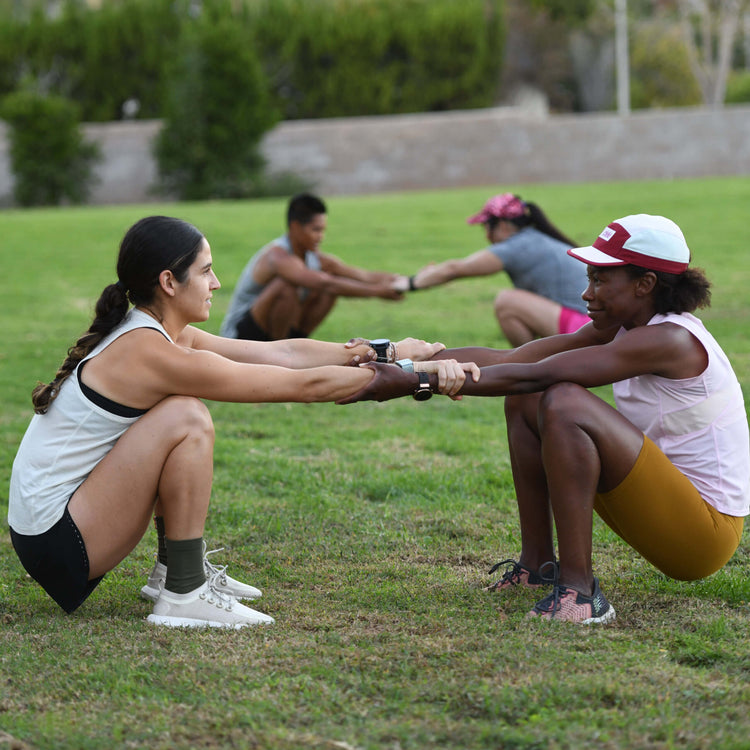
5 “MOVEMENT SNACKS” TO DO WITH A PARTNER
It’s time to rethink what a workout can be! Sure, there’s definitely still a time and place for a dedicated run, yoga class, or lifting session. But the movement in your life doesn’t have to (and shouldn’t) end there. Fill your life with purposeful, stimulating physicality, and it will pay off in ways you expect, and ways you can’t predict. You’ll perform better, think better, and simply feel better all day! The perfect place to start is with “movement snacks" (and Xero Shoes, of course.) What are movement snacks? “Movement snacks” are a groundbreaking training concept from Born to Run 2: The Ultimate Training Guide by Chris McDougall and Eric Orton, the follow-up to McDougall’s iconic best-seller Born to Run. These easy-to-learn exercises help engrain crucial human movement patterns on both physiological and neurological levels. Borrowing a page from McDougall’s limitless exercise manifesto Natural Born Heroes: Mastering the Lost Secrets of Strength and Endurance, they also require no equipment and can be done anytime, anywhere. Another great thing about snacks? You can do them on your own, but they’re even better with a partner! Here’s why. For one, adding someone else to your movement practice has been shown in research (and by countless real-life examples) to help all types of workouts be more effective. It helps people stay more motivated to keep coming back. It even enhances exercise's stress-reducing benefits. Basically, adding another person (or two, or a few) instantly makes everything that makes movement great even better! Here are three movement snacks that are group-friendly, fun, and suitable for all fitness levels! These exercises are excerpts with permission from Born to Run 2: The Ultimate Training Guide. Get your own copy of the Born to Run 2 book here. Xero Shoes For You and Your Partner Prio-Neo BUY HERE Forza Trainer BUY HERE 360 BUY HERE 1. Braced Deep Squat: Solo or With Partner "How to: Face your partner and grab each other's wrists. Support each other by pulling backward, easing down into a squat at the same time. Pause a few beats, then pull each other back up. How many: 10-12, with a focus on range of motion and controlled technique, rather than speed. Pay special attention to: Focus on getting as deep as you can, with good form, keeping feet facing straight forward. Improve through time. Purpose: Deep Squats can unlock your entire range of motion, everything from your neck to the soles of your feet, while loosening tight hips and Achilles and easing lower back tension" 2. Bear Crawls: Solo or With Partner How to: Start on all fours with your hands under your shoulders, knees under hips, and head in a comfortable position, eyes looking at least 1-2 feet ahead of you, ideally straight ahead. Press evenly onto your palms, tuck your toes under and lift your knees to hover just off the floor. Push onto your left toes and right hand, stepping forward with the left hand and right foot. Continue forward in a nice fluid motion. Keep the hips stable and avoid overly swaying form side to side. Repeat the same opposite arm-opposite leg pattern to move forward. Throughout your movement, keep your focus on easy breathing through the nose. How many: 20 steps (each time the right hand makes contact with the ground) to start, and build from there. Pay special attention to: Keeping the knees 2-3 inches off the floor. Work on keeping the hips stable and avoid shifting from side to side. Rest as needed. Purpose: Crawling builds full body strength and connects upper and lower body, as well as developing coordination. It's also a sneaky quad burn!" A movement snack from "Born To Run 2: The Ultimate Training Guide" Make it a fun partner workout by bear crawling towards each other and then shaking your partner's hand. Then proceed to bear crawl backward and repeat. 3. Side Lift: With Partner "How to: Balance barefoot on your right forefoot using a wall or chair or partner to help you stabilize. Keeping your right leg straight, raise your left leg sideways (think of half a pair of scissors opening). Raise your left leg only as high as you can while maintaining level hips, and then go back to the start position. Note: This is a stabilizing exercise for the stance leg, not a range-of-motion exercise for the moving leg. How many: 15-25 reps, then repeat with the opposite leg. 4. Knee Lift: With Partner How to: Balance barefoot on your right forefoot using a wall or chair or partner to help you stabilize. Keeping your right leg straight, raise your right heel slightly. Now, lift your knee in front of you as high as you can, and then go back to the start position. Keep your movements slow and controlled. The focus is on the stance leg, not the moving leg. Note: This is a stabilizing exercise for the stance leg, not a range-of-motion exercise for the moving leg. How many: 15-25 reps, then repeat with the opposite leg. 5. Quick Feet: With Partner How to: Facing a partner, raise your hands and place your palms against theirs. While maintaining palm-to-palm contact, the "lead" partner then tries to quickly step on the other person's toes. The following partner should dance away, doing everything possible to avoid foot contact while keeping palms connected. Switch How many: Just have fun with it and switch back and forth several times between leaders. Pay special attention to: Never breaking hand contact. Purpose: This is a fun group warm-up to get the heart rate up and simulate the central nervous system with some multidirectional, quick movement with the feet.

A Podiatrist Explains Why “Every Shoe Is A Walking Shoe”
It’s tempting to treat your shoe rack like a toolbox. For each situation, there’s a product in the $133 billion shoe industry to fit it, from workout shoes to hiking, running, and yes, even walking shoes! But do we need to have a specialized shoe for something as fundamental and human as walking? Massachusetts-based podiatrist Dr. Alissa Kuizinas isn't so sure. “We often have this perception that we need a special category of shoe to wear for walks,” she says. “There’s even a whole segment of footwear called ‘walking shoes,’ and there’s all kinds of technology involved in that. But every shoe can be a walking shoe, as long as it meets certain standards.” It took a long journey for this doctor to reach her current conclusions on walking shoes. Here’s how her personal experience led her to change her mind, and how she guides clients into finding the right shoe for their situation. “I knew there had to be a better solution” Dr. Kuizinas has more than a medical perspective on footwear. She struggled with foot discomfort for years, and found that she was repeatedly jamming her big toe inside her shoes with each step she took – “even with my ‘good shoes’ on,” she recalls. https://youtu.be/D_0iYRwKOaw “Traditional medicine would recommend that I wear custom orthotics, limit my activity and wear stiff-soled shoes until the pain becomes bad enough to require surgery,” she says. “I knew there had to be a better solution.” The deeper this foot doctor delved, the more she found that her feet weren't the problem. It was her shoes! “Even though shoe companies spend millions of dollars on technology and design development, the shoes they produce and sell are doing a major disservice to human feet,” she explains. “From cushioning, to heel-toe drops, stiff soles, to narrow toe boxes, nearly every aspect of a modern shoe has a negative impact on foot movement. It leads to an epidemic of dysfunctional, weak, and malfunctioning feet. And most of us aren’t even aware this is happening!” She finally found her fit once she started wearing anatomically designed, flexible shoes with little to no padding, like Xero Shoes. In a matter of months, she wasn’t just feeling better; she had changed dramatically her perspective on what a shoe should be! Get Out of the Way of Your Feet “The primary purpose of shoes is to protect our feet from the elements and from different surfaces,” Dr. Kuizinas says. “They’re for when we are out in the world walking on a slippery or wet surface. Ultimately, shoes are really there JUST for that purpose. They don’t need to be bulky and restrictive, or supporting our feet. Our feet are designed to support themselves!” So… why not just walk barefoot all the time? Research has actually supported this idea of slight “protection” being beneficial. A study comparing outdoor barefoot walking with minimalist footwear found that the shoes actually improved walking form in both younger and older adults, and reduced risk of falling. To maximize on these benefits, Dr. Kuizinas recommends a ‘as little shoe as possible’ approach to footwear, and instead focusing on building resilient, capable feet. “Rather than building up the shoe to try to externally support the foot and limit motion, minimalist shoes get out of the way of our feet,” she says. “They allow feet to function naturally, to move, and bend. The transition to minimalist shoes involves stripping down the unnecessary and harmful components of modern shoes so that feet can be feet again!” When working with clients today, Dr. Kuizinas shies away from the term “minimalist shoes.” Instead, she likes to call them “functional shoes” or “natural shoes.” “Natural footwear is really on the leading edge of shoe technology,” she says. “By stripping away the unnecessary and downright harmful features of shoes, we allow feet to function effortlessly as they were designed to!” How to Find Your “Functional” Walking Shoe Dr. Kuizinas has a three-point checklist of what she looks for in a functional shoe, which not-so-coincidentally match up with the three major functions of the human foot during walking. “The foot has three jobs: to be a ‘mobile adaptor’ or shock absorber when it first hits the ground, to be a rigid lever during push-off, and to be a sensor of the environment,” she explains. “As long as it can do these three things, it will function well.” Here’s how she says those functions should be reflected in the shoes you wear: Wide Toe Box: “Functional sneakers should have a wide, foot-shaped toe box. They’re broad enough to allow our big toe to sit in a proper alignment.” Flat & Flexible Soles: “Our feet contain 26 bones and 33 joints. And joints are designed to move! A flexible sole allows for natural foot movement. By contrast, stiff and rigid shoes with elevated heels prevent the joints from fully moving through their range of motion and limit the foot.” Minimal cushion and support: “A functional shoe should only be only as cushioned as you really need. Overly cushioned shoes dampen your perception of what's going on with your feet, and your ability to walk well.” If you follow those simple standards, Dr. Kuizinas says, every shoe can be a walking shoe! Be Patient and Build Up to Barefoot Both from her personal experience and in her professional practice, Dr. Kuiz recommends being patient when it comes to transitioning to full-time “functional” footwear. In the early days, she recommended a one-two approach of wearing functional shoes primarily for low-impact activities like walking and running errands, while also going barefoot around the house to help build resilience in the feet and ankles. “As your foot function improves, you’ll be able to tolerate less arch supportive shoes for greater amounts of time,” she explains. Need help finding your perfect pair of shoes? Not sure where to start? Explore our Best Wide Toe Box Shoes collection for our most popular styles, or take our take our personalized Shoe Finder quiz. About Dr. Alissa Kuizinas Dr. Alissa Kuizinas is a virtual podiatrist with a passion for natural foot function. She helps people transform their feet by focusing on healthy footwear, movement patterns, and gait mechanics to get them moving at their absolute best.

Running Injury Studies
Walking in Minimalist Shoes Is Effective for Strengthening Foot Muscles - Dr. Ridge’s research showing how walking in minimalist shoes built foot strength as much as doing an 8-week foot strengthening exercise program.Foot Core Training to Prevent Running-Related Injuries: A Survival Analysis of a Single-Blind, Randomized Controlled Trial - Dr. Sacco’s research showing 250% fewer injuries over the course of a year in runners who did an 8-week foot strengthening program.Irene Davis, Ph.D.: Evolution of the foot, running injuries, and minimalist shoes - Dr. Davis’s interview with Dr. Peter Attia about natural movement and footwearWalking in Minimalist Shoes Is Effective for Strengthening Foot Muscles

Shoes so Comfortable, You May Fall Asleep Wearing Them
Xero Shoes are so comfortable and addicting that out of our 53,000 5-star reviews, a surprising number of customers have literally fallen asleep wearing Xero Shoes!

Simple Methods for Busy Dads to Stay Fit and Healthy With LivFitKarl
As a busy dad, you’ve a lot going on. Keeping up with work... spending time with your kids... helping around the house... working in the yard... Finding time to for health and fitness can feel tough, but it doesn’t have to be. Instagram influencer and Xero Shoes partner LivFitKarl has plenty of tips for doing effective workouts based on natural movement that don’t take up a lot of time. Even if you have just a few minutes at the beginning or end of the day, you can do an effective workout with minimal weight to increase your mobility, improve your stamina, gain more flexibility, and grow stronger—all things that will help you show up as your best for those important little people (or fully grown people) in your life. It all starts with making a commitment to being the fittest, healthiest version of yourself. And keeping what is most important front and center. Your fitness journey doesn’t have to be about how fast you can run or how much you can lift. It can be about keeping up with your kids and having the energy and stamina to pursue the things you enjoy. You also don’t need a lot of equipment or a dedicated space. Even on vacation, if you can find a few minutes, you can keep up your progress toward your fitness goals. And remember, even little choices like wearing barefoot shoes to walk around town, can help you reach your health and fitness goals faster. Training in barefoot shoes gives you access to natural movement, which may help you make the gains you’re after. Karl’s Favorite Xero Shoes https://xeroshoes.live/wp-content/uploads/2023/01/Video-5.mov For Summer Barbeques and Casual Nights Out Dillon BUY HERE Dillon Canvas Slip-On BUY HERE Kelso BUY HERE Go-To Every Day Shoes Prio Neo BUY HERE Nexus Knit BUY HERE For Workouts Speed Force II BUY HERE Forza Trainer BUY HERE

Mike Gabler, Survivor 43 Winner: Stronger from the Ground Up in Xero Shoes
The reality TV show victor shares how he built balance and resilience to outlast 15 competitors in Fiji and come away with the crown! Mike Gabler has always been picky about his shoes. An avid hunter, hiker, and slackline enthusiast who also spends some long days on his feet in operating rooms, Gabler knows what he wears directly impacts how he performs under pressure, but also how he feels at the end of the day. So when he was chosen to compete on the 43rd season of the reality TV show Survivor, Gabler took the decision seriously. He says his Xero Shoes Xcursion Fusion boots were a secret weapon on the show—and since he defeated all comers and won the show at age 50, we can be sure this is a guy who knows about covert strategies! We caught up with Gabler in his hometown of Meridian, Idaho, to discuss how he trained and performed for his victory in Survivor 43. How did you learn about Xero Shoes initially? So by day, I work in the operating room, and I stand for hours. And I usually wear cowboy boots with a heel on them. But after long days, I found that I just couldn't get comfortable, even at night sleeping. And I was looking around online, and a Xero Shoes ad found me. I bought a couple of pairs: Z-Trail, Xcursion Fusion, and some Alpines. And they took a little getting used to in the beginning, because it's a different way to walk. But once I got comfortable in them, it felt amazing, especially when I was on the trail. When I was hiking in Idaho or Alaska during the spring or summer, I loved them, because it made me feel like I was attached to the ground. So then when I went on this TV show, I knew I wanted to be lean and mean and be able to balance and work well. I have a bunch of different types of shoes at my house, and I was in my closet looking down at all the choices. And I felt like I had to select my Xero Shoes. They were my go-to for everything that wasn't aquatic. Even then, I wish I had brought a second pair of Xero Shoes, because instead I brought these surfing shoes where your toes go into little pockets. They just never dried out, and I developed a jungle rot problem. But I love my Aqua X Sports now, and they would have dried way better. Did you strategize your footwear choices during training? I did! Balance and core strength were a big component, and I did a lot of slacklinin. Whenever I did that, I wanted the closest thing to barefoot. Balance is crucial on this show, because there's a lot of challenges where you run across a beam holding something, or stuff like that. I definitely knew I didn't want any shoes with a big foam platform on the bottom. That wasn’t going to help me out with balance or posture. And you know what? I left the game with five records and won the thing, so I guess my shoe selection helped. What model were you wearing on the show? I used the Xcursion Fusion. Sometimes on the island I wore wool socks with them, and sometimes I would go barefoot in them, depending on how dry my socks were. I was wearing them when I broke a Survivor record on the grip challenge in episode 7. There was a huge obstacle course we had to go over that had balancing and carrying, and the record for it was 25 minutes. And I ended up breaking it with about 38 minutes. That's when my opponent, Cowboy Cody finally let go. Did you see anyone on the show regret their footwear decisions? There were a couple people that had those big shoes with foam on the bottom, and they rolled their ankles. And those are injuries that linger when you're out there in the jungle, but unfortunately the game doesn't stop for you to heal. You just have to keep going. So for me, not only did the Xero Shoes help me on the island, but I think it was going back before that, because I wore them for about a year beforehand. It made me think of all those little muscles in my feet and ankles that you don't use when you have one of these big foam balls that you're walking on. Those muscles were stronger. And here’s another thing: I was 50 during the show, and my body held up really well. In 43 seasons, there's only been two winners over 50. I'm the second one. And I'm somebody who has had knee issues and pain in my life, and I was really concerned about that! But during the game I had no issues. So I think they may have helped me a little bit in preparation, but they certainly helped me simply to stay in the game. Did you make any footwear converts on the show? For the most part, people were pretty happy with their shoe choices, because everybody puts a lot of thought into it. But as the show progressed, people would ask me, “What are those?” Because the Xcursion Fusion are really an interesting design. They look a little like a moccasin, but they give you some ankle support on the exterior. A few people even tried them and told me, “I'm getting a pair.” You definitely had some complicated relationships to maintain. As the show went on, it felt like a big part of your strategy was to “hide in plain sight.” How did that help you? I used what I call the “Alligabler” strategy to manage my threat level. I’d strike, then go back underwater for a little while. You know, if you're not careful, people will notice you, and they'll start taking shots at you. So I quickly kind of had to change my game and adapt to get under the radar. I was in on all these alliances, but everybody thought I was just in theirs. And it kind of helped me out, because I had a lot of information coming through me. And then I was able to make decisions that helped advance my game. Then, in the back half of the game I was more of a farmer, just planting a lot of seeds. Survivor is like downhill skiing through trees. Whatever you think is going on, if you can't pivot quickly, you're gonna get slammed. But you know, the whole game, I had zero votes against me until the very last night. And that’s when I got seven out of eight, which is a near perfect game. That's about as good a game as I could play. So now that you’ve experienced the show, but also watched it, what felt most real and unreal about your reality TV experience? Watching it back was simply amazing. When I got back on June 1, I was 38 pounds lighter than I am now. And obviously I knew what's going to happen as far as the scoreboard. But it was like watching a football game where it's 33 to 27 in triple overtime, and I didn’t know what the plays were going to be. The editing is really what the plays are, and I got to watch that live with you guys. Of course there's a couple of things I would have liked them to show a little bit more of, but the producers of Survivor are genius storytellers. They had everybody guessing all the way through. I thought season 43 was a very entertaining season, but it’s also one that’s going to age really well for people who binge things later. There were some parts of it that were a little bit slower. But I liken it to a roller coaster: it climbs and goes tick, tick, tick. And then after a little bit, it goes right into some serious drops. We definitely left a lot of jaws dropped along the way, and it was a lot of fun. Now that you’re back, what’s your favorite thing to do in a pair of Xero Shoes? When it's cold outside, like right now it’s 10 degrees here in Boise, I put on a pair of wool socks, put on my Alpines, and then I go out and get on the slackline. I even get a sweat going when I'm out there. It’s just really chill. I’ll put my ear pods in with some cool music, and then just do that for an hour. It’s just a perfect way to leave my day and whatever else is going on behind.

How to Winterproof Your Barefoot Shoes by Anya's Reviews
Once you experience the freedom of barefoot shoes it’s hard to go back to your old pinchy boots. And even though there are practical barefoot winter boots available, depending on your environment it might not be quite enough. I myself had a difficult time in extreme cold and ice before I learned a few hacks. Because my feet can’t tolerate uncomfortable shoes anymore, the old heavy boots in my closet just weren’t an option! Fortunately I found some useful hacks that made all the difference. Here are the practical tips I use to make my barefoot shoes even more functional for serious weather. Table of Contents: Waterproofing Insoles Socks/Boot Liners Ice Cleats 1. Waterproofing (Xero Shoes Denver Leather pictured above) It’s a great idea to have some waterproofing products on hand, even if the shoes you buy come pretreated. Waterproofing wears off over time, and you will stay much warmer if you’re dry. Here are my pro tips for waterproofing shoes: Spray’s are best for delicate materials you don’t want to change the look of. Waxes and oils are more effective, but might change the appearance of your shoes. Always test the product on a small inconspicuous spot and let dry for 24 hours before doing the whole shoe (in case you don’t like how it comes out). Expect to reapply. Sprays need to be reapplied every handful of wears, waxes can be applied once a season (maybe more or less depending on how much you use your shoes). 2. Insoles (Xero Shoes Gracie pictured above) Adding my own insoles is my favorite warmth hack. Because the soles on barefoot shoes are thin, they might feel cold in winter. Choosing warmer insoles can make a big difference, and you can easily swap them out or layer them on top inside the shoe. Here are my favorite warm insoles that are still zero drop and flexible: Felted wool (you can buy sheets of it and cut your own). Sheepskin Faux fur insoles (if you are vegan) Just keep in mind that adding thick insoles will take up more space inside your shoes. Felt insoles are thinner than sheepskin/faux fur, so might be a better option if you didn’t size up in your boots. (Want to see how waterproof the Gracie is? Check out my video here.) 3. Socks/Boot Liners Socks can also make a big difference in your comfort level during the winter. I choose socks with a high wool content because they are warm and they conform to your foot over time. I also often wear a pair of leg warmers over the top of my socks for an extra layer that doesn’t take away toe box space. The boots I wear in the dead of winter are all a size bigger than my usual so I can fit thick cozy socks in them. An alternative to thick socks is a boot liner. But you need enough space for the liner to fit fully inside, so it works best in unlined boots like the Xero Gracie. And you probably will need a size up so your foot still fits (are you noticing a theme?). 4. Ice Cleats & Running Spikes (Xero Shoes Alpine pictured above) I walk outside every single day no matter the weather and most of the time the soles on my barefoot boots are perfectly adequate for me. But there are days when the conditions are such that I need more grip. That’s where ice cleats or running spikes come in. They can easily be put on over the top of a pair of barefoot winter boots, and if you live in a place with lots of snow and ice they can really keep you moving safely through the winter. I like the ones with a security strap over the top of the shoe so they don’t fall off in the snow. You can also grab Icewalkers from Xero Shoes. And there you have it, my best tips for winterproofing your barefoot shoes. Here’s to happy feet through the coldest, wettest months of the year! And of course, you can explore Xero Shoes minimalist waterproof shoes and boots. This Guest Blog Post is By Anya's Reviews Anya first discovered barefoot shoes after a long history of foot issues. By changing her footwear and strengthening her body she was able to completely transform her life. Today Anya is trying to change the status quo of shoes and foot health by making natural footwear options more accessible around the world. Find everything you need to start your happy feet journey at her website AnyasReviews.com.
Win a FREE Signed Copy of Born To Run 2 and a pair of Xero Shoes
Born to Run Reboot - Book and Shoes Giveaway

Xero Shoes For All Types of Exercise
There is nothing like the feeling when you slip on your shoes to work out. Whether you’re getting ready to head to the gym for a sweaty session, or you’re taking the dog on your regular neighborhood walk, an enjoyable and comfortable workout starts feet first. So if you or a loved one are looking to enhance their fitness routine (no matter how serious you are about exercise) Xero Shoes has a great assortment of shoes for each activity. Xero Shoes is all about natural movement, and no matter how you move, we’ve got the perfect footwear for everyone, from cross-trainers to yogis to weight lifters to a casual walker. A new pair of stylish workout shoes is just what you or your loved one needs to feel good while exercising, and maybe even help you check off your New Year’s fitness resolutions. FOR THE HIGH-INTENSITY FITNESS LOVER Looking for a great workout shoe that can do it all? The 360º Cross-Training Shoe was designed specifically for HIIT workouts, CrossFit and more. With superior traction and control, you’ll be able to handle any quick lateral movement with ease. Reviewers say these shoes are super comfortable, even when they’re sweating hard through box jumps, rope climbs or plyometrics. FOR THE BUSY BODY (AT THE GYM OR ON THE GO) The Prio Running and Fitness Shoe is touted as the most comfortable shoe for anything you do, and working out is no exception. The Prio is made of ultra-light and durable materials, perfect for athletes or anyone on the go. Plus, they won’t break the bank, as one of the few performance shoes out there that are under $90. FOR THE LIFTER Weight trainers say that strength starts with your feet, and the NEW Forza Trainer gives you power from the ground up. You’ve never felt so secure as you do with the heel-and-instep lockdown strap. The bootie-like construction and moisture-wicking, silky smooth lining makes the Forza trainer so comfortable you can wear them to the gym, in the gym, from the gym, and everywhere else you go. FOR THE YOGI (OR FOR WALKING THE DOG) Okay, you don’t wear shoes in yoga, but when you’re coming to and from the studio, you want to wear something that you can easily slip on and off your feet. That’s why the Ashland Bootie is a perfect cold weather option. It’s also a sustainable boot, made with hemp, and a vegan faux-shearling lining that keeps your feet warm. FOR THE ULTIMATE RECOVERY Whether you’re protecting your feet from gross gym shower floors, or going for a hike in a warm climate, you’re going to love the foot-stimulating technology of the Naboso Trail Sandal. You don’t want to risk going into the gym showers barefoot... pack a super light sandal that will take up no space in your gym bag. With the evidenced-based foot stimulation technology, you can start your active recovery instantly. And if the sandal isn’t quite your style, try the Naboso Proprioceptive Insoles that you can slip into your favorite shoes.
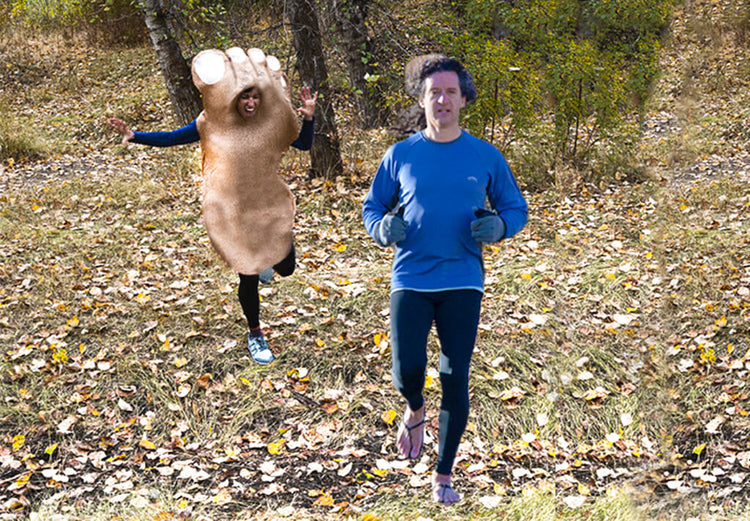
Caption This Photo For a Chance to Win Free Xero Shoes
Caption This For a Chance to Win FREE Xero Shoes We've seen Steven run from bears, lions, racecars, and more...but Bigfoot?? We've put this pic on Facebook, Instagram, and Twitter. Head to one (or all) of those places and give us your best caption about Steven and the scary Bigfoot. One winner will be selected on November 3rd to receive a FREE pair of Xero Shoes of their choice. Instagram Caption Sweepstakes Official Rules NO PURCHASE IS NECESSARY TO ENTER OR WIN. A PURCHASE WILL NOT IMPROVE YOUR ODDS OF WINNING. Eligibility: The sweepstakes is open to legal residents of the United States who are eighteen (18) years of age or older (or the age of majority in their state of residence, whichever is greater). Employees of Sponsor and their immediate family members are prohibited from entering. Entrants are subject to all applicable federal, state and local laws and regulations. Void where prohibited by law. Sponsor: The sweepstakes is sponsored by Feel the World, Inc. dba Xero Shoes, 100 Technology Drive, Suite 315C, Broomfield Colorado 80021 (“Sponsor”). Agreement to Official Rules: By participating in this sweepstakes (the “Sweepstakes”), entrants agree to abide by the terms and conditions thereof as established by Sponsor. Sponsor reserves the right to qualify all submissions and to reject any submissions that do not meet the requirements for participation as established by Sponsor. Sweepstakes Period: The Sweepstakes begins on 10/27/22 10:00am MT and ends on 11/4/22 10:00am MT (“Sweepstakes Period”). Entries received before or after the Sweepstakes Period are void. Sponsor’s computer is the official time-keeping device for the Sweepstakes. How to Enter: During the Sweepstakes Period, go to any of the below platforms and enter a caption on the Bigfoot post. Facebook: https://www.facebook.com/xeroshoes Instagram: https://www.instagram.com/xeroshoes/ Twitter: https://twitter.com/xeroshoes Limit one Entry per person regardless of method of entry. Anyone found to use multiple accounts to enter will be ineligible. Incomplete Entries are invalid and not eligible to win. Use of computer programs and/or other automated devices to enter the Sweepstakes is prohibited. Normal internet access and device usage charges imposed by your ISP may apply. Sponsor assumes no responsibility for computer system, hardware, software or program malfunctions or other errors, failures, delayed computer transactions or network connections that are human or technical in nature, or for damaged, lost, late, illegible or misdirected entries; technical, hardware, software, electronic or telephone failures of any kind; lost or unavailable network connections; fraudulent, incomplete, garbled or delayed computer transmissions whether caused by Sponsor, the users, or by any of the equipment or programming associated with or utilized in this Sweepstakes; or by any technical or human error that may occur in the processing of submissions or downloading, that may limit, delay or prevent an entrant’s ability to participate in the Sweepstakes. Sponsor reserves the right, in its sole discretion, to cancel or suspend this Sweepstakes and award the prizes from Entries received up to the time of termination or suspension should causes beyond Sponsor’s control, including unauthorized human intervention, which, in the sole opinion of Sponsor, corrupt, compromise or materially affect the administration, fairness, security or proper play of the Sweepstakes or proper submission of entries. Sponsor is not liable for any loss, injury or damage caused, whether directly or indirectly, in whole or in part, from downloading data or otherwise participating in this Sweepstakes. Selection of Winners: On or about November, 4th 2022, a total of 1 winner will be selected at random from all eligible Entries received. The odds of winning are not calculable in advance and depend on the number of eligible Entries received. Notification of Potential Prize Winners: The Winners will be notified via whatever platform you entered in. If any Winner does not acknowledge acceptance of the Prize within five (5) business days after being notified that he or she is a Winner, another Winner may be chosen using the same procedure specified above. Requirements of Winners: Sponsor may require all Winners to sign and return an affidavit of eligibility and liability and publicity release, wherever lawful, as a precondition to award of any Prize. If any Winner fails to sign and return the requested documents to Sponsor, that Winner may be disqualified, and the Prize will thereafter be awarded to an alternate Winner from the remaining valid entries using the procedure specified above. Prize: The Winner will receive a free pair of Xero Shoes of their choice. The estimated retail value of each Prize is $50-$180. Prizes are non-transferable and non-refundable, and no substitutions will be made except as provided herein, in the Sponsor’s sole discretion. Prizes are not redeemable for cash. Sponsor reserves the right to substitute a particular Prize for one of comparable or greater value. No individual may win more than one Prize. All Winners are responsible for any and all applicable local, state, and/or federal taxes and fees. NON-MONETARY PRIZES ARE AWARDED AS IS AND WITHOUT CONDITION, WARRANTY, GUARANTEE OR REPRESENTATION OF ANY KIND, EXPRESS OR IMPLIED (INCLUDING WITHOUT LIMITATION, ANY IMPLIED WARRANTY OF MERCHANTABILITY OR FITNESS FOR A PARTICULAR PURPOSE) BEYOND THE CUSTOMARY REPRESENTATIONS PROVIDED WHEN THE PRIZE IS SOLD AT RETAIL. Sponsor will issue a Form 1099 to any Winner receiving a Prize with a total retail value of $600 or more. Privacy: By submitting an entry, participants acknowledge and agree that any personal information that they provide will be maintained in accordance with Sponsor’s Privacy Policy, which can be found at https://xeroshoes.live/privacy/. RELEASE AND PUBLICITY: ENTRANTS AGREE TO RELEASE AND HOLD HARMLESS SPONSOR AND ITS RESPECTIVE OFFICERS, DIRECTORS, EMPLOYEES, PARTNERS, AFFILIATED COMPANIES, SUBSIDIARIES, SUPPLIERS, DISTRIBUTORS, ADVERTISING AND PROMOTIONAL AGENCIES, AGENTS, SUCCESSORS AND ASSIGNS FROM AND AGAINST ANY CLAIM OR CAUSE OF ACTION ARISING OUT OF PARTICIPATION IN THE SWEEPSTAKES. SPONSOR IS NOT RESPONSIBLE FOR ANY TYPOGRAPHICAL OR OTHER ERROR IN THE PRINTING OF THE OFFER OR ADMINISTRATION OF THE SWEEPSTAKES OR IN THE ANNOUNCEMENT OF THE PRIZE. BY RECEIPT OF THE PRIZE AND BY SIGNING AN AFFIDAVIT OF ELIGIBILITY AND LIABILITY/PUBLICITY RELEASE, IF REQUESTED, EACH WINNER CONSENTS TO THE USE OF HIS OR HER NAME, AND ADDRESS BY SPONSOR FOR ADVERTISING AND PROMOTIONAL PURPOSES, WITHOUT ANY ADDITIONAL COMPENSATION, EXCEPT WHERE PROHIBITED. NO ENTRIES WILL BE RETURNED. ALL ENTRIES BECOME THE PROPERTY OF SPONSOR. DISPUTES: EACH ENTRANT AGREES THAT: (1) ANY AND ALL DISPUTES, CLAIMS, AND CAUSES OF ACTION ARISING OUT OF OR IN CONNECTION WITH THIS SWEEPSTAKES, OR ANY PRIZES AWARDED, SHALL BE RESOLVED INDIVIDUALLY, WITHOUT RESORTING TO ANY FORM OF CLASS ACTION, PURSUANT TO ARBITRATION CONDUCTED UNDER THE COMMERCIAL ARBITRATION RULES OF THE AMERICAN ARBITRATION ASSOCIATION, TO TAKE PLACE IN DENVER, COLORADO; (2) ANY AND ALL CLAIMS, JUDGMENTS AND AWARDS SHALL BE LIMITED TO ACTUAL OUT-OF-POCKET COSTS INCURRED, INCLUDING COSTS ASSOCIATED WITH ENTERING THIS SWEEPSTAKES, BUT IN NO EVENT ATTORNEYS' FEES; AND (3) UNDER NO CIRCUMSTANCES WILL ENTRANT BE PERMITTED TO OBTAIN AWARDS FOR, AND ENTRANT HEREBY WAIVES ALL RIGHTS TO CLAIM, PUNITIVE, INCIDENTAL, AND CONSEQUENTIAL DAMAGES, AND ANY OTHER DAMAGES, OTHER THAN FOR ACTUAL OUT-OF-POCKET EXPENSES, AND ANY AND ALL RIGHTS TO HAVE DAMAGES MULTIPLIED OR OTHERWISE INCREASED. ALL ISSUES AND QUESTIONS CONCERNING THE CONSTRUCTION, VALIDITY, INTERPRETATION AND ENFORCEABILITY OF THESE OFFICIAL RULES, OR THE RIGHTS AND OBLIGATIONS OF ENTRANT AND SPONSOR IN CONNECTION WITH THE SWEEPSTAKES, SHALL BE GOVERNED BY, AND CONSTRUED IN ACCORDANCE WITH THE LAWS OF THE STATE OF COLORADO, WITHOUT GIVING EFFECT TO ANY CHOICE OF LAW OR CONFLICT OF LAW, RULES OR PROVISIONS (WHETHER OF THE STATE OF COLORADO OR ANY OTHER JURISDICTION) THAT WOULD CAUSE THE APPLICATION OF THE LAWS OF ANY JURISDICTION OTHER THAN THE STATE OF COLORADO. Sweepstakes Results and Official Rules: To obtain the identity of the Winners and/or a copy of these Official Rules, Jocelyn Kellner at jocelyn@xeroshoes.live.

USA Artistic Swimming's Favorite Xero Shoes
Since 2020, Xero Shoes has been a proud sponsor of the USA Artistic Swimming Senior National Team! They wear our sandals and shoes out of the water, and we like to think it's just one of the ways that they've been so successful!Recap of the 2022 SeasonThe 2022 season just wrapped up for USA Artistic Swimming’s Senior National Team, and it was quite the success! They collected 20 medals (half were gold!) after three World Series, one Super Final, and a World Championship traveling to France, Greece and Hungary. Of course, when they took time to explore Europe after their competitions were over, they wore their Xero Shoes Goals for the 2023 SeasonNext year’s team will have a busy season ahead of them with the World Series, Super Final, World Championships, and the Pan American Games. It will be a critical juncture that will determine the trajectory of the next few years ahead of Paris 2024. With just 10 teams and 18 duets able to make it to Paris, the competition will be fierce. You can bet that Xero Shoes will be cheering on the team! USA Artistic Swimming's Favorite Xero Shoes:Z-Trail EV Hiking SandalHFS Road Running ShoeAqua Cloud Sandal

Meet Xero Shoes' Customer Happiness Team
Do you ever wonder who the people are behind Xero Shoes' Customer Happiness Team? Whether you need help picking your favorite Xero Shoe to buy, or you’re looking for your order, our Customer Happiness Team is the front line between our customers and the rest of our team. We have team members that have been here for more than 4 years! They have extensive knowledge about each of our shoes, not only from talking with thousands of Xero customers, but because they’re regularly talking with the product designers and of course, wearing the shoes in their daily life. Most importantly, Xero Shoes Customer Happiness Team does everything with a smile on their face. Their goal is to be as helpful as they can to help you find your new favorite Xero shoe. To get to know the team better, we asked them a few questions… What's the most popular question you get asked by our Xero Shoes’ customers? Customers often want to know if these shoes can really help their feet feel better. – Kelly I find customers often ask about women’s to men’s sizing conversions! – Leevi Are you the guy from the commercial?! – Ross Recently, customers have asked what shoes are best for Pickleball? – Savannah Do you actually wear these shoes? – Amber How do I exchange the shoes? Because it takes about 3 seconds to reply and it makes me feel productive :) – Jan The most common question is probably how fast can I get my shoes! – Caitlin They ask what style would be best for what activity? We have a ton of styles and some may be better for certain activities, compared to others. I enjoy helping people get that figured out! – Garrett What’s your favorite Xero shoe and why? I'm really digging the Ashland, they are like slippers on my feet! – Ariel The HFS by far, because it's the most comfortable in my opinion. Flexible, thin, and fits like a sock. – Kylee The Speed Force and HFS! They're both incredibly lightweight and if I am looking for a closer to the ground feel, the Speed Force is my go to. – Garrett I love the Zelen because it's light weight, breathable, and my new favorite workout shoe. – Leevi The HFS! It's easily the most comfortable shoe I've ever had. – Caitlin The Denver, I dig its style and warmth in the winter. – Ross I have many favorites but I will always default to my well-worn and loved Hana shoes! – Kelly HFS, no question. The best shoe I have ever owned. It made me rediscover running. – Jan What do you do outside of work? Share some of your favorite hobbies or activities! I like to do all sorts of things, hang out with my dogs, family, love eating food, and watching scary movies. – Ariel Outside of work I love to spend time hiking, traveling, doing Yoga, or reading! – Caitlin Outside of work, I like to go on outdoor adventures, take a scenic drive, do anything water-related, and most of all, spending time with the people I love. When you have the right people, doing nothing can be everything. :) – Leevi Gyming, hiking, taking day trips and spending time with loved ones. – Savannah When I am not working, I enjoy the normal things in life with my boyfriend and fur babies (two Boston Terriers, Bruno who is 12, and Moxley who is 2). We spend time in the outdoors, cooking/baking, painting, listening to music, watching professional wrestling, watching movies (mostly ones from the 80s and 90s), watching drag/professional car racing, road trips, etc. Fly-fishing, camping, and Krav Maga. – Ross Hiking, dog sledding, lifting weight, reading books, and an occasional beer at a brewery with my dogs. – Kylee I go to a lot of concerts, play music and disc golf, plus go hiking and see new places! – Garrett When I’m not at work, I love spending time with my husband and family. I also love to bake! – Kelly I love to get out climbing, mountain-biking, running, XC skiing. I enjoy editation and a good cup of coffee. – Jan Any surprising or fun customer service stories? I did have one customer ask me for the office address to send flowers as a thank you for helping them. Definitely wasn't expecting that! – Caitlin It’s always very satisfying to hear from an apprehensive customer who took a chance with a pair Xero shoes and found that they were amazingly life changing! I’ve heard from many customers in this situation that they have their mobility back because of their Xero shoes and are ‘customers for life’! – Kelly






